What an AI Coach Should Actually Know About You
A generic chatbot can hold a conversation. A useful coach needs to know your goals, your history, and what you actually wrote yesterday - not just what you type right now.
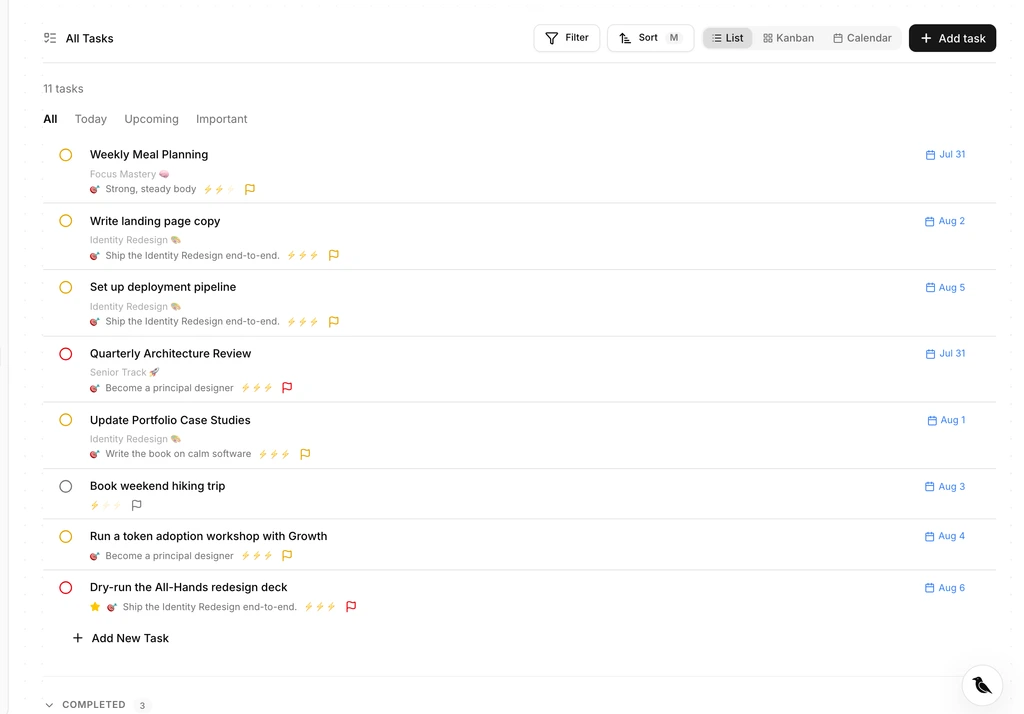
Open any general-purpose chatbot and ask "how am I doing on my goals this month?" and you'll get a thoughtful-sounding answer built from nothing - no memory of what your goals are, no record of what you did last week, just a well-written response shaped entirely by how you phrased the question. It's fluent. It's also not actually about you.
This is the core limitation of using a general assistant as a coach: it's a smart conversational surface with no ground underneath it. Ask it something that requires knowing you and you're asking it to guess, however articulately.
Fluent Is Not the Same as Informed
A generic assistant is genuinely good at holding a conversation - it can ask good clarifying questions, phrase encouragement well, and reason clearly about a general problem you describe to it. What it cannot do is know that you've missed your last four workout goals but have been unusually consistent about your evening reflections, or that the thing you said mattered most six weeks ago hasn't come up once since.
That gap is invisible in a single exchange, because the response still sounds good. It becomes obvious over weeks of use, when the "coaching" never seems to build on anything - every conversation starts from zero, because in a real sense, it does.
What Grounding Actually Means
A coach that's grounded in your own data works from a different starting point: your actual goals, your actual check-ins, your actual journal entries, not a description you type fresh each time. Concretely, that means a few things:
It knows what you're working on
Not "tell me about your goals" every session - it already has the list, what stage each one is in, and how long it's been since you touched it.
It remembers what you said, not just what you're saying now
If you wrote three days ago that a project was stressing you out, and today you mention the same project neutrally, a grounded coach can notice the shift instead of treating today's message as the entire available context.
It can point to something specific
"You mentioned feeling behind on this three times in the last two weeks" is a different kind of useful than "it sounds like you're feeling behind," because the first one is a fact you can check, not a paraphrase of what you just said back to you.
It stays inside what actually happened
Grounding cuts both ways - a coach with access to your real history should also be more conservative about inventing progress or patterns that aren't there, because there's a real record to check against instead of just the shape of the conversation so far.
The Trade-off: Less Universal, More Useful
A general chatbot's strength is breadth - it can discuss anything, in any domain, with no setup. A grounded coach gives some of that up. It's built around your goals and your journal specifically, which makes it worse at, say, explaining a tax rule or debugging code, and better at exactly one thing: understanding your actual situation across sessions.
For most people using an AI for personal coaching rather than general Q&A, that trade is the right one. You don't need a coach that can discuss anything. You need one that remembers what you told it matters and doesn't make you re-explain your life every time you open the app.
Text or Voice, Same Requirement
Whether the interaction is typed or spoken doesn't change the underlying requirement - a voice interface without grounding is just a spoken version of the same blank-slate problem, arguably a worse one, because talking to something that clearly doesn't know your history feels more jarring out loud than it reads on a screen. The mode is a convenience layer. The grounding is what makes either mode worth using regularly.
This is the design Aliigned's coach follows: it reads from your actual goals and journal - in text or voice - rather than starting from a description you re-type each time, so the tenth conversation can build on the first nine instead of repeating them.
What to Actually Ask a Coach Like This
If you're evaluating whether an AI coach is grounded or just fluent, a simple test works well: ask it something that requires remembering a specific detail you mentioned days ago, not something you can just look up. "What did I say was bothering me about this goal last week?" A generic assistant will either admit it doesn't know or make something plausible up. A grounded one will tell you, correctly, or say clearly that it doesn't have that entry - which is itself a useful answer, because it means the rest of what it tells you is more likely to be real.
Related blogs
Related Post
Expand your knowledge with these hand-picked posts.
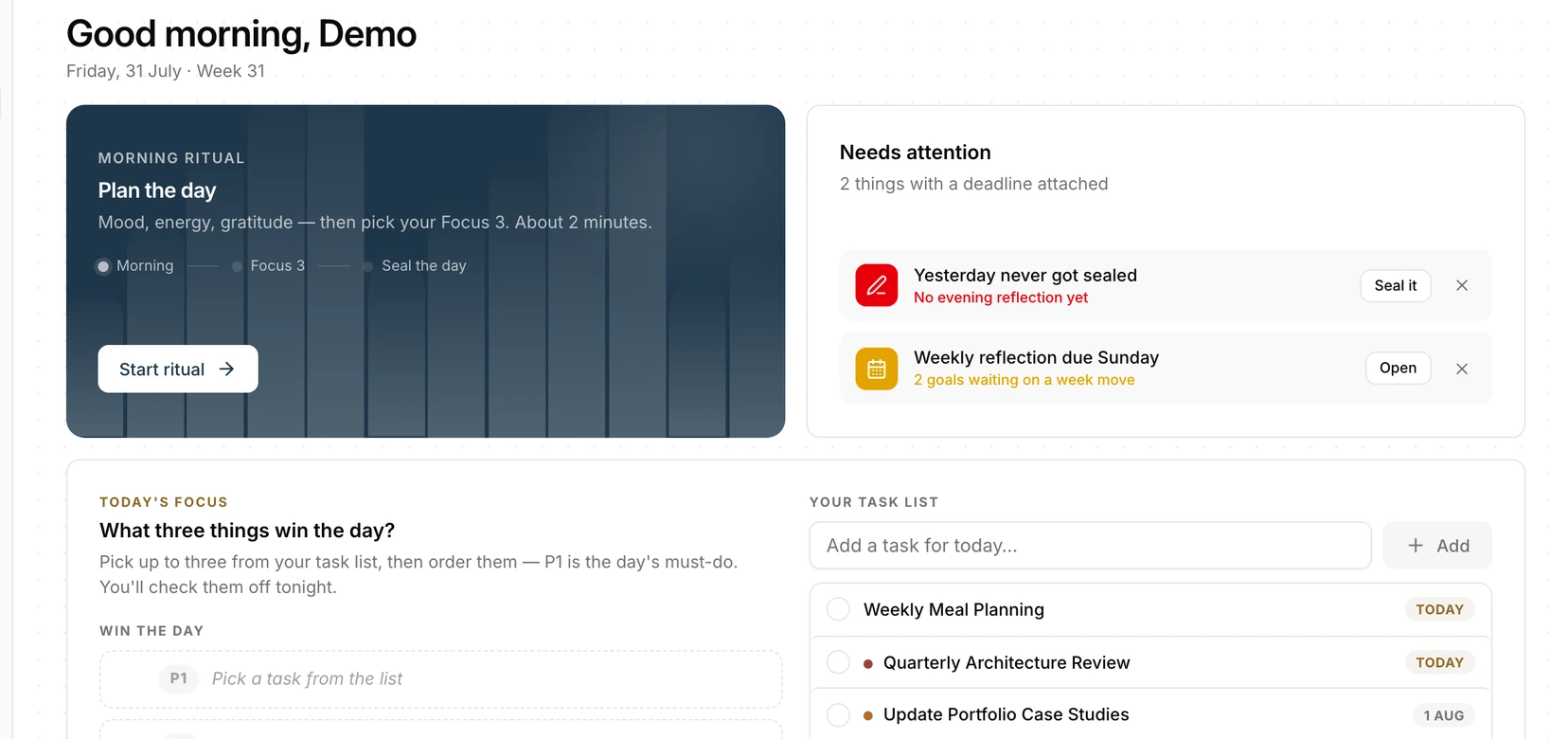
The Two-Minute Morning Check-In Beats the Perfect One
A tiny, repeatable morning ritual outlasts an elaborate one. Here is why two honest minutes each morning do more for your day than a routine you eventually abandon.
Maya K.
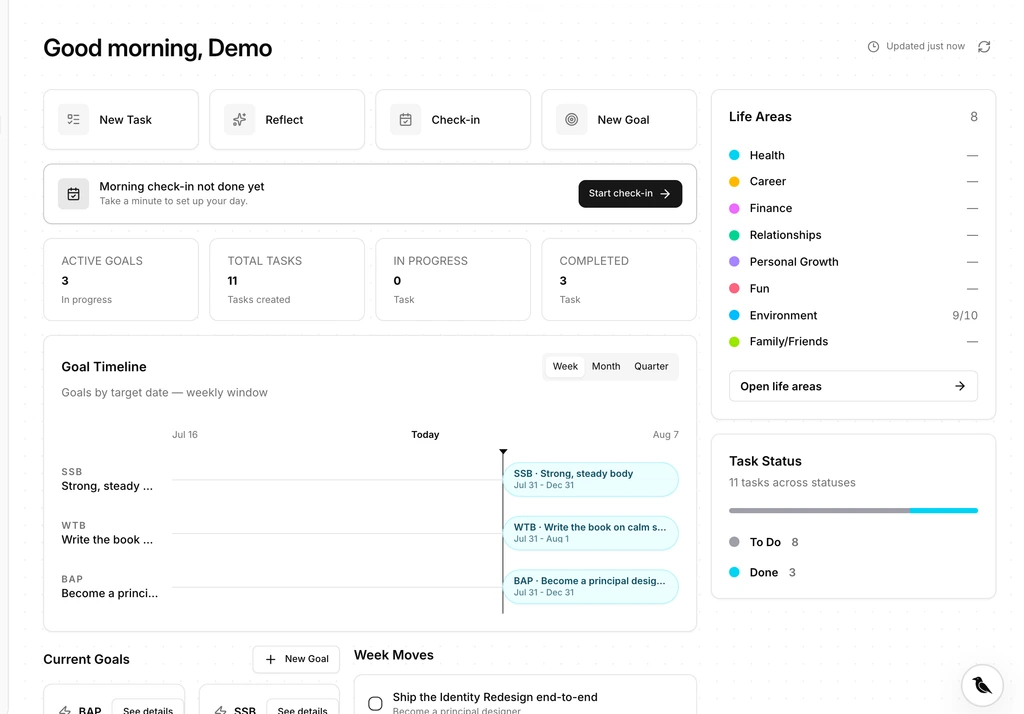
Monthly Goal Reviews That Actually Stick
A monthly review only works if you seal it and score yourself honestly. Here is a simple structure for reviewing goals without turning it into another task you dread.
Owen R.
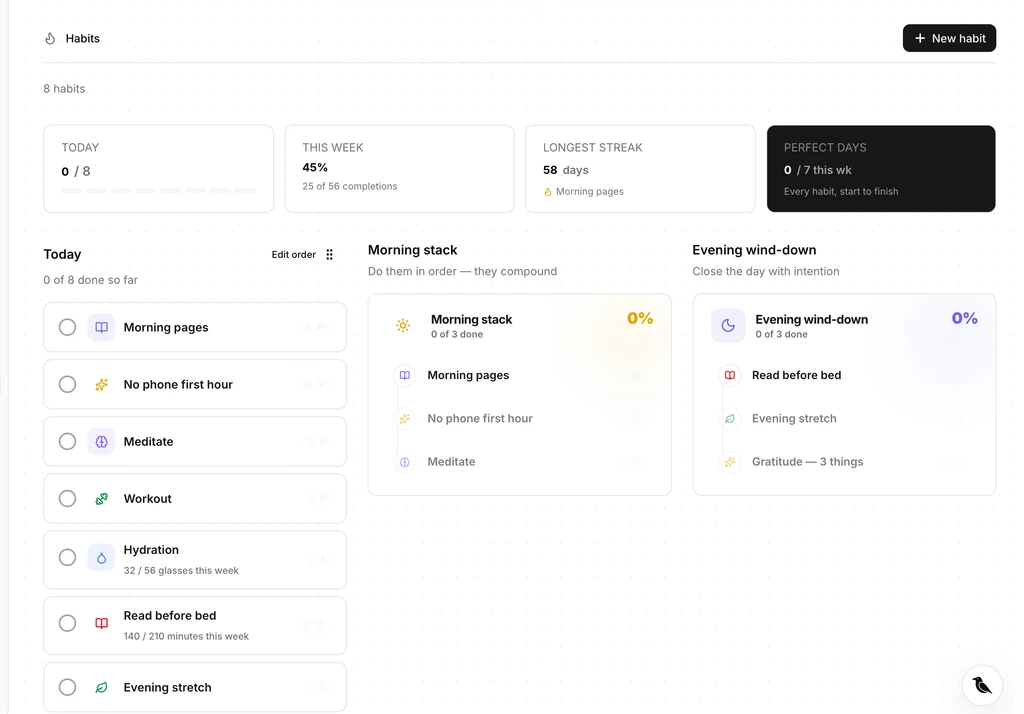
Life Areas: A Map for Where Your Attention Actually Goes
Burnout rarely arrives as a single crisis. It usually starts as one life area quietly starved of attention for months. A simple map can catch that early.
Priya S.
Run your life from one calm place.
Free to start. Two minutes tomorrow morning.