Life Areas: A Map for Where Your Attention Actually Goes
Burnout rarely arrives as a single crisis. It usually starts as one life area quietly starved of attention for months. A simple map can catch that early.
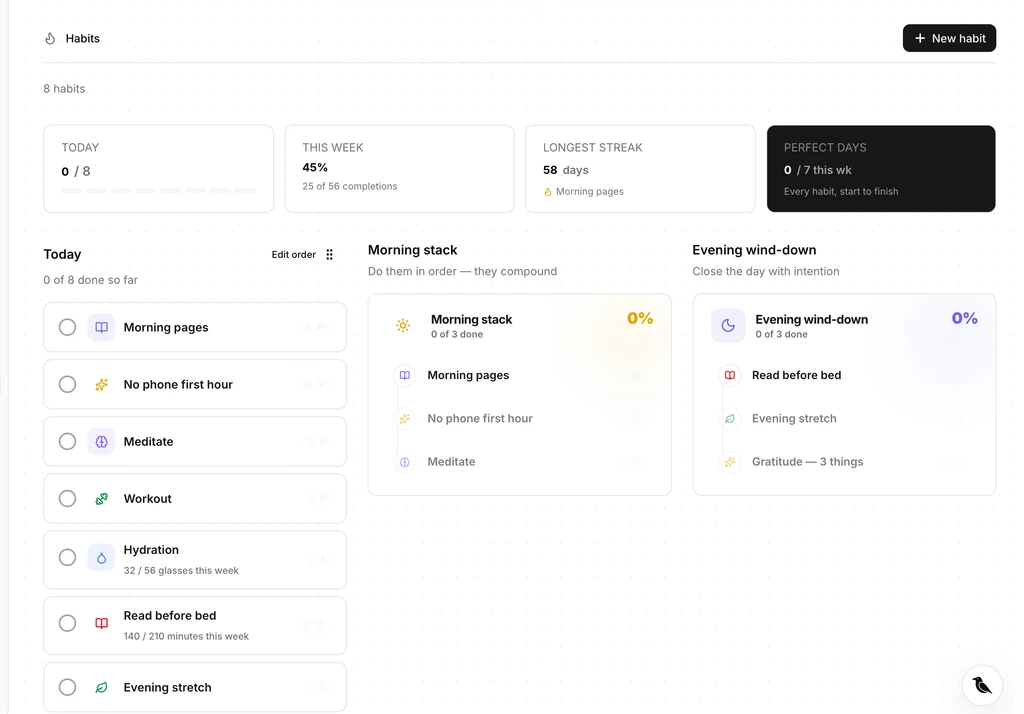
Ask someone how they're doing in general and you'll usually get a vague answer - "busy," "fine," "hanging in there." Ask them specifically how their health is, how their friendships are, how work feels right now, and how their finances look, and the vague answer splits into four different, often contradictory ones. Work might be going great while health has quietly been ignored for four months. That gap is invisible in a general "how are you," and it's exactly where burnout tends to start.
The Problem With a Single Read on "How Am I Doing"
Life doesn't move on one dial. It moves on several at once - work, health, relationships, finances, personal growth, whatever categories fit your life - and they rarely move together. The trouble is that our attention naturally flows toward whatever is loudest that week. A work deadline is loud. A slowly fraying friendship is quiet. A body that's been under-slept for two months doesn't send an alert - it just gradually costs you more, until it becomes impossible to ignore.
By the time an ignored area becomes loud enough to notice on its own, it's often already a crisis: a health scare, a relationship ending, a financial problem that's been compounding quietly. The goal of mapping life areas isn't to achieve perfect balance - it's to make the quiet ones visible before they become loud.
Breaking "Life" Into Areas You Can Actually See
The idea, sometimes called a wheel of life, is simple: split your life into a handful of areas - typically somewhere between six and ten - and look at each one on its own rather than averaged into a single mood. Common areas include health, work, relationships, finances, personal growth, and recreation, though the exact list should fit the person, not a template.
The value isn't in the categories themselves. It's in what separating them reveals. A single "how's life" score of 7/10 tells you almost nothing actionable. Health at 8, work at 9, relationships at 3 tells you exactly where to look next.
What to Actually Track Per Area
A number alone is a start, but a few more angles make the map far more useful:
Standing
Where is this area right now, on its own terms - not compared to anyone else's life, just where you'd honestly place it today.
Trajectory
Is it improving, flat, or declining? A 6/10 that's been climbing for two months is a completely different situation than a 6/10 that's been sliding from an 8.
Consistency
Is this area getting steady attention, or does it swing between neglect and overcorrection? Some areas suffer less from low effort than from erratic effort - three weeks of nothing followed by a frantic catch-up.
Correlations
Areas rarely move in isolation. A dip in health often precedes a dip in work performance a few weeks later. A financial stress spike often shows up in relationship friction. Noticing these patterns over time turns a static snapshot into something closer to an early-warning system.
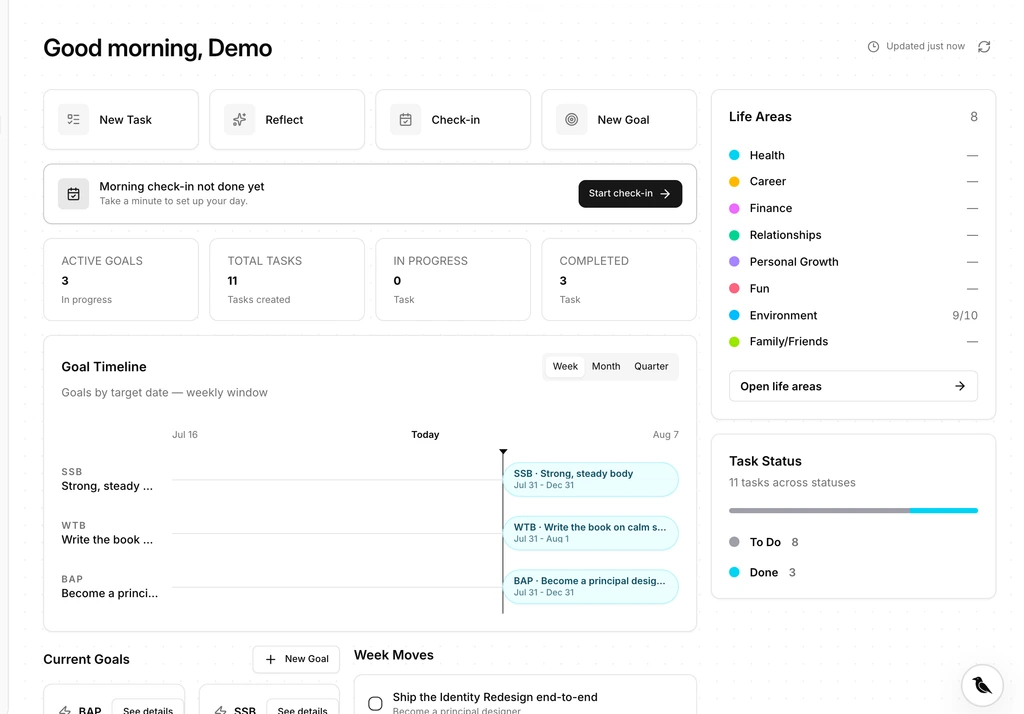
Aliigned's life-area view builds on exactly this idea - each area gets its own standing, trajectory, consistency, and effort signals rather than one averaged score, precisely so a starved area shows up before it becomes a crisis.
Catching Starvation Before It Becomes Burnout
Burnout is often described as if it appears suddenly, but in hindsight it's almost always visible in the trajectory of one or two areas for months beforehand. Health trending down. Recreation flatlined at zero for a whole quarter. Relationships getting steadily less attention as work absorbs more.
None of these look alarming week to week. A missed workout, a canceled dinner with a friend, a weekend that turned into more work - each one is a reasonable, forgivable choice in isolation. The problem is cumulative, not acute, which is exactly why it needs a map rather than a feeling to catch. You don't feel a slow decline the way you feel a sudden setback; you only notice it once it's already deep.
Using the Map Without Obsessing Over It
The point of a life-area map is not to optimize every area simultaneously - that's a recipe for a different kind of exhaustion. Some seasons genuinely call for pouring most of your attention into one area, work during a launch, health after a diagnosis, and letting others idle for a while on purpose. That's a legitimate choice as long as it's a choice you can see yourself making, not a drift you notice six months too late.
Check the map periodically - monthly is a reasonable cadence, the same one that works well for goal reviews. Look for the area with the worst trajectory, not the worst standing. A low but stable area is a known trade-off. A declining one is the one that needs attention before it becomes the thing that finally forces a reckoning.
Related blogs
Related Post
Expand your knowledge with these hand-picked posts.

The Two-Minute Morning Check-In Beats the Perfect One
A tiny, repeatable morning ritual outlasts an elaborate one. Here is why two honest minutes each morning do more for your day than a routine you eventually abandon.
Maya K.
Monthly Goal Reviews That Actually Stick
A monthly review only works if you seal it and score yourself honestly. Here is a simple structure for reviewing goals without turning it into another task you dread.
Owen R.
What an AI Coach Should Actually Know About You
A generic chatbot can hold a conversation. A useful coach needs to know your goals, your history, and what you actually wrote yesterday - not just what you type right now.
Ben T.
Run your life from one calm place.
Free to start. Two minutes tomorrow morning.