The Two-Minute Morning Check-In Beats the Perfect One
A tiny, repeatable morning ritual outlasts an elaborate one. Here is why two honest minutes each morning do more for your day than a routine you eventually abandon.

Most morning routines die within a few weeks, and it's rarely because the person lacked discipline. It's because the routine was too big to survive a bad morning. Twenty minutes of journaling, a page of gratitude, a mood tracker, a planning ritual, maybe a walk first - each piece is reasonable on its own, but stacked together they require a version of you that has time, energy, and a clear head. Most days you don't have all three.
The Real Failure Mode
The routine doesn't get abandoned because you decide to quit. It gets abandoned quietly, one skipped morning at a time. You oversleep, or a call comes in early, or you just don't feel like writing a page. You tell yourself you'll catch up tomorrow. Tomorrow the same thing happens. Within two weeks the notebook is closed and the whole habit reads, in hindsight, as something you tried once.
This is a design problem, not a willpower problem. A routine that only works on your best mornings is a routine that mostly doesn't happen, because most mornings are not your best mornings.
What a Two-Minute Version Looks Like
A two-minute check-in has almost no failure conditions. It fits before coffee, on a delayed train, in the two minutes between waking up and picking up your phone for something else. The version worth keeping usually has three parts:
1. Name the day's shape
Not a full plan - just a sentence. Busy, light, back-to-back, open. This takes five seconds and already changes how you approach the first meeting.
2. Pick one thing that matters
Not a to-do list. One thing that, if it happened, would make the day feel worthwhile. It might be a task, a conversation, or just showing up calm to something hard.
3. Notice how you actually feel
Not an essay - a word or two. Tired, wired, fine, dreading something. This is the part people skip when they're busy, which is exactly when it's most useful, because it's the earliest possible warning that something needs attention before it becomes a bigger problem.
That's the whole ritual. It survives a bad night's sleep, a chaotic house, a delayed flight, because it asks almost nothing of you.
Why Small Beats Elaborate
The expressive-writing research on reflection generally points the same direction: the benefit comes from the act of noticing and naming, not from volume. A few honest sentences appear to do most of the work that a full page does - the marginal value of writing more drops off fast. What actually predicts whether a habit sticks is closer to behavioral-science territory on habit formation: frequency and low friction matter more than intensity. A ritual you do 300 mornings a year beats one you do 20 times beautifully and then stop.
There's also a compounding effect that a single elaborate entry can't produce. A two-minute note today is unremarkable. Sixty of them are a record of how your energy, mood, and priorities actually moved over two months - not how you remember them moving, which tends to smooth over the bad weeks and exaggerate the good ones.
Making It Actually Stick
A few things help keep the two-minute version from creeping back toward twenty:
- Attach it to something you already do. Right after the alarm, right after the first coffee - not a new standalone moment you have to remember to create.
- Cap it on purpose. If you notice yourself writing three paragraphs, that's a sign to say the same thing in one sentence tomorrow. The constraint is the point.
- Let bad days be short. A rough morning might get one word for how you feel. That's a complete entry, not a failed one.
- Don't backfill. Missing a day is fine. Trying to catch up on three days at once is usually what kills the habit for good.
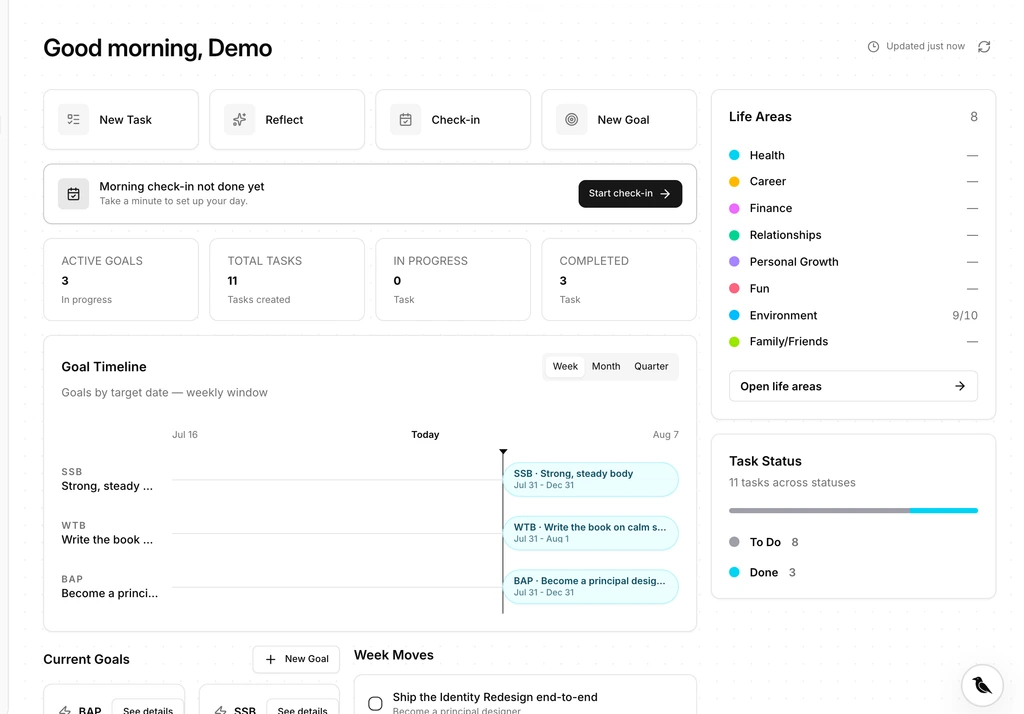
This is part of why Aliigned's morning check-in is deliberately built as a two-minute flow rather than a journaling app - a day, a focus, a feeling, done. The point isn't to produce a beautiful entry. It's to produce hundreds of small, honest ones, because that's the only version of "reflect every morning" that actually survives contact with an ordinary week.
The Bar Is Lower Than It Feels
If your current morning routine feels like something you're behind on, the fix usually isn't more discipline - it's a smaller ritual. Two minutes, three questions, done before you've finished waking up. It won't feel as satisfying as a long entry on the days you have time for one. But it'll still be there in six months, and a routine that's still there in six months beats a perfect one that lasted three weeks.
Related blogs
Related Post
Expand your knowledge with these hand-picked posts.

Consistency Beats Intensity, Especially After You Miss a Day
Streaks make consistency feel fragile. Effort curves make it feel forgivable. A look at why showing up moderately and often beats going all-in and burning out.
Nadia F.
Monthly Goal Reviews That Actually Stick
A monthly review only works if you seal it and score yourself honestly. Here is a simple structure for reviewing goals without turning it into another task you dread.
Owen R.

Life Areas: A Map for Where Your Attention Actually Goes
Burnout rarely arrives as a single crisis. It usually starts as one life area quietly starved of attention for months. A simple map can catch that early.
Priya S.
Run your life from one calm place.
Free to start. Two minutes tomorrow morning.