Monthly Goal Reviews That Actually Stick
A monthly review only works if you seal it and score yourself honestly. Here is a simple structure for reviewing goals without turning it into another task you dread.
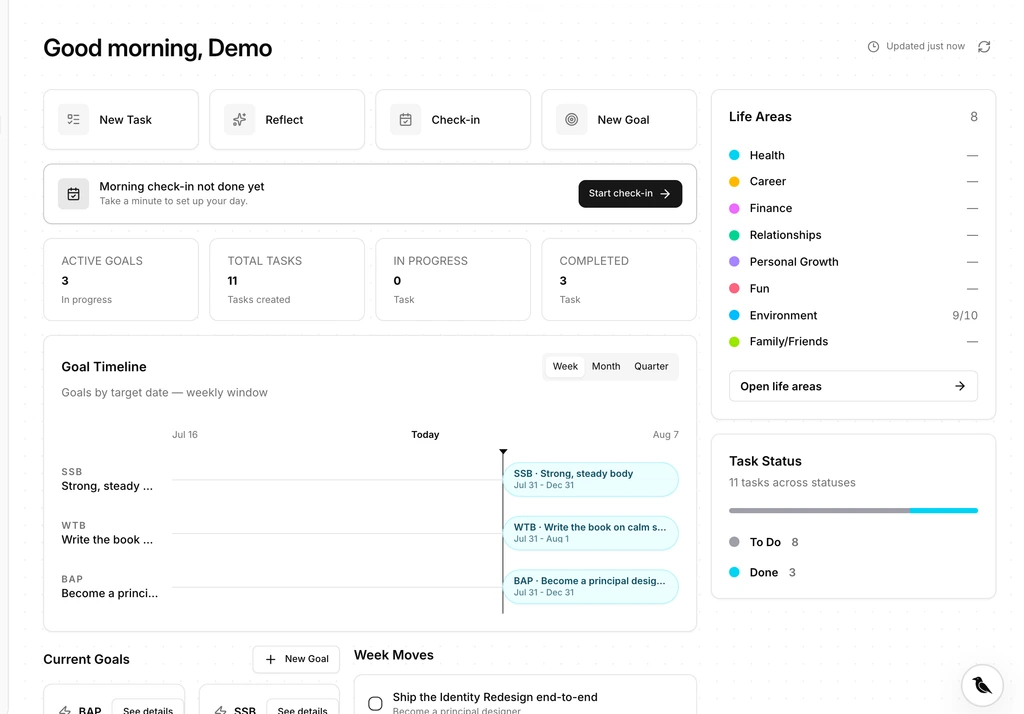
Most people who set goals never formally review them. They set an intention in January, think about it occasionally, and either hit it or don't by December. There's no checkpoint in between where anyone asks, honestly, "is this still working?"
A monthly review fixes that, but only if it's structured well. Done wrong, it turns into either a guilt session (list everything you didn't do) or a rubber stamp (write "good progress" and move on). Neither one changes your behavior. Done right, it's the single highest-leverage habit for anyone who sets goals and wants to actually reach them.
Why Monthly Is the Right Grain
Weekly is too frequent to show real movement - most goals don't shift meaningfully in seven days, so a weekly review mostly just repeats itself and starts to feel pointless. Quarterly is too sparse - by the time you notice a goal has drifted, you've lost ten or twelve weeks you can't get back.
Monthly sits in the middle. It's frequent enough to catch a stalled goal before it's been stalled for a season, and infrequent enough that there's usually something real to say. A month is also a natural unit most people already think in - paychecks, bills, and calendars all run on it, so a monthly cadence rides along rather than fighting your existing rhythm.
The Structure That Works
Score it, don't just describe it
"Made some progress" is not a review - it's a shrug. A number, even a rough one out of ten, forces a decision. Was this a 3 or a 7? Answering that honestly requires actually comparing where you are to where you meant to be, which is the whole point.
Separate effort from outcome
A goal can get a low outcome score and a high effort score - you showed up consistently but the results haven't arrived yet, which is normal for anything with a lag between input and output. Conflating the two leads to two bad outcomes: quitting a goal that's actually on track, or continuing to invest in one where the effort simply isn't happening. Scoring them separately keeps you honest about which situation you're actually in.
Write down the one adjustment
Not five adjustments - one. What's the single change that would most improve next month? Maybe it's a smaller weekly target, a different time of day, or admitting the goal needs to be dropped entirely. A review that doesn't produce at least one concrete adjustment was probably just a status update.
Seal it
This is the step most self-review systems skip, and it's the one that matters most. Sealing means the review becomes read-only - a dated, unchangeable record - instead of a living document you keep quietly editing. Without that boundary, "reviewing" a goal turns into rewriting its history, and every review starts to look suspiciously like the last one. A sealed monthly reflection is what lets you look back after six months and see an honest trend line instead of a story you've smoothed over as you went. This is why Aliigned treats each month's goal reflection as something you seal, not something you keep touching up later.
Scoring Honestly Is the Hard Part
The mechanics are simple. The actual difficulty is answering the score question truthfully when the truthful answer is disappointing. A few things help:
- Score before you explain. Write the number first, then the reasoning. If you write the reasoning first, you'll often talk yourself into a kinder number.
- Compare to your own plan, not to an ideal. The question isn't "did I crush this goal," it's "did I do roughly what I said I'd do a month ago."
- Let a low score be informative, not shameful. A 3/10 month is data. It tells you something isn't working - the target, the timing, or your actual priorities. It doesn't mean you're a person who fails at goals.
When the Review Reveals the Goal Was Wrong
Occasionally a monthly review surfaces something bigger than an adjustment: the goal itself no longer fits. Priorities shifted, or the goal was set for reasons that don't hold anymore. This isn't a failure of the review process - it's exactly what it's supposed to catch. A goal you're honestly reviewing every month can't quietly become obsolete for a year the way an unreviewed one can.
Start Small
If you've never done a formal review, don't start with all your goals at once. Pick the one goal that matters most right now, score it honestly this month, note the one adjustment, and seal it. Do that again next month. The system compounds - six sealed monthly reviews are worth more than one perfect quarterly retrospective, because they're honest in the moment rather than reconstructed after the fact.
Related blogs
Related Post
Expand your knowledge with these hand-picked posts.

The Two-Minute Morning Check-In Beats the Perfect One
A tiny, repeatable morning ritual outlasts an elaborate one. Here is why two honest minutes each morning do more for your day than a routine you eventually abandon.
Maya K.
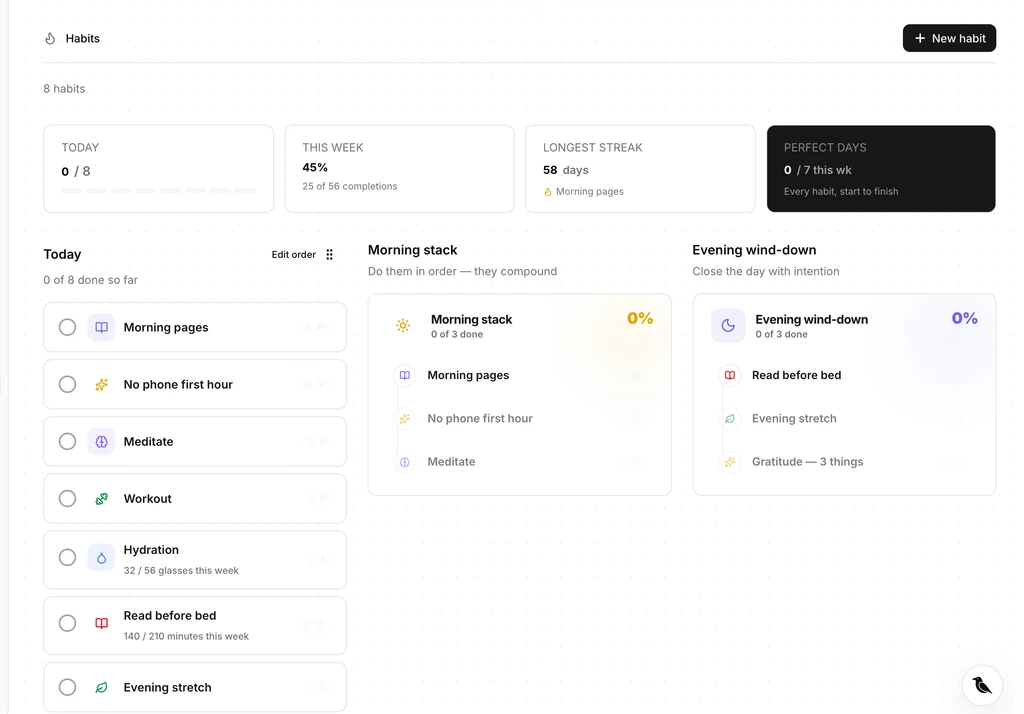
Life Areas: A Map for Where Your Attention Actually Goes
Burnout rarely arrives as a single crisis. It usually starts as one life area quietly starved of attention for months. A simple map can catch that early.
Priya S.
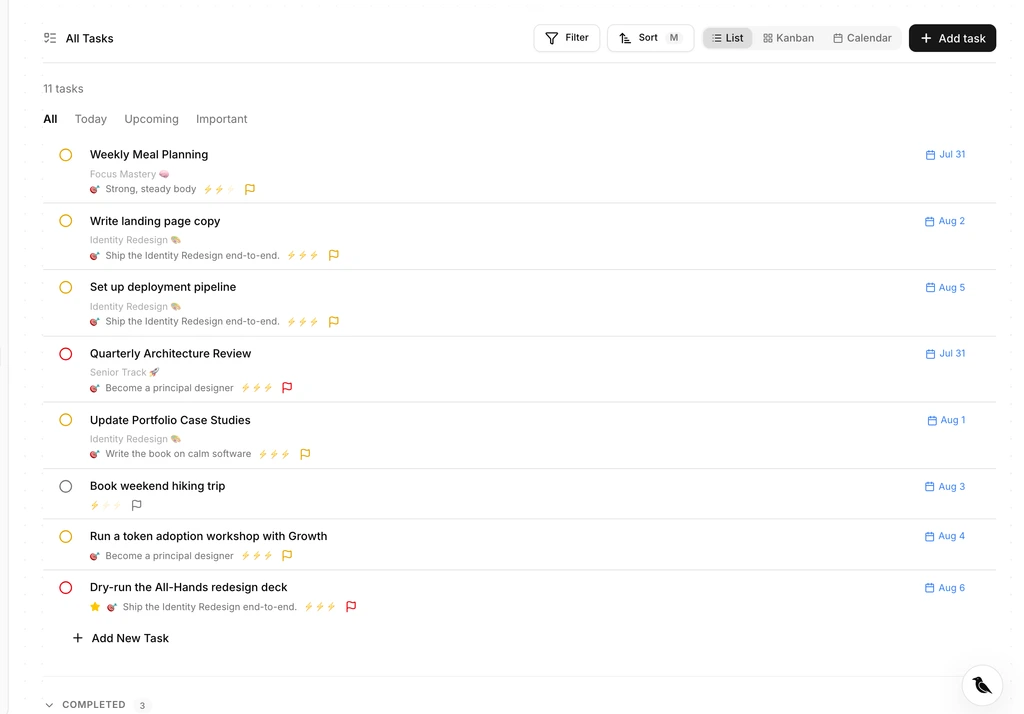
What an AI Coach Should Actually Know About You
A generic chatbot can hold a conversation. A useful coach needs to know your goals, your history, and what you actually wrote yesterday - not just what you type right now.
Ben T.
Run your life from one calm place.
Free to start. Two minutes tomorrow morning.